
Where this equipment fits
A sheep skinning machine, also called a sheep dehider, removes the pelt after the required preparation and connects with the dressing rail. Zhengye’s cattle and sheep brochure presents SD roller and GD dehider families. Both use hydraulic drive; compare their working arrangements and preparation requirements when selecting the equipment.
The equipment brief must state whether the project uses the halal route or non-halal conventional route. Downstream engineering can share interfaces, but the entry method and operating controls require their own review.
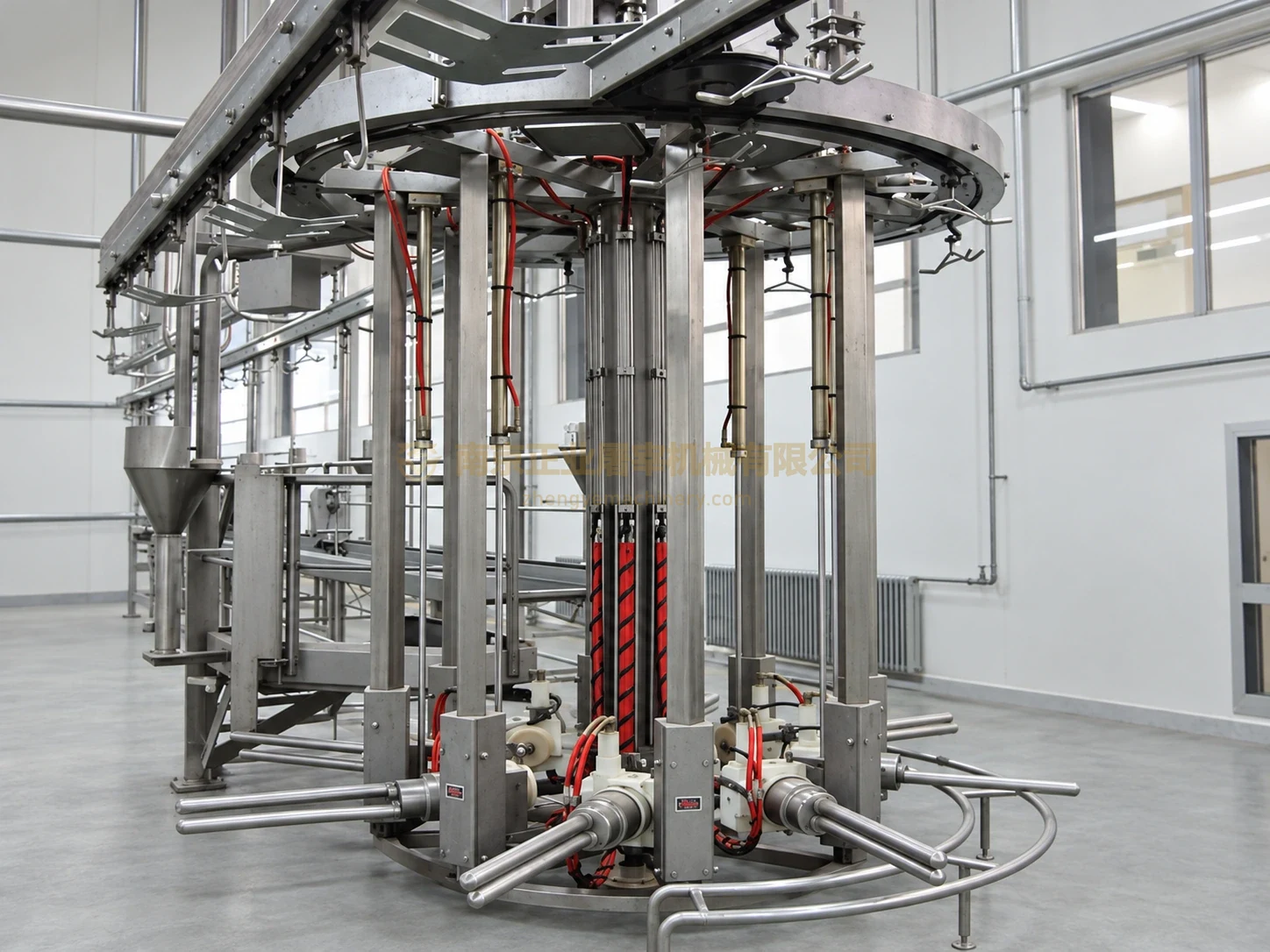
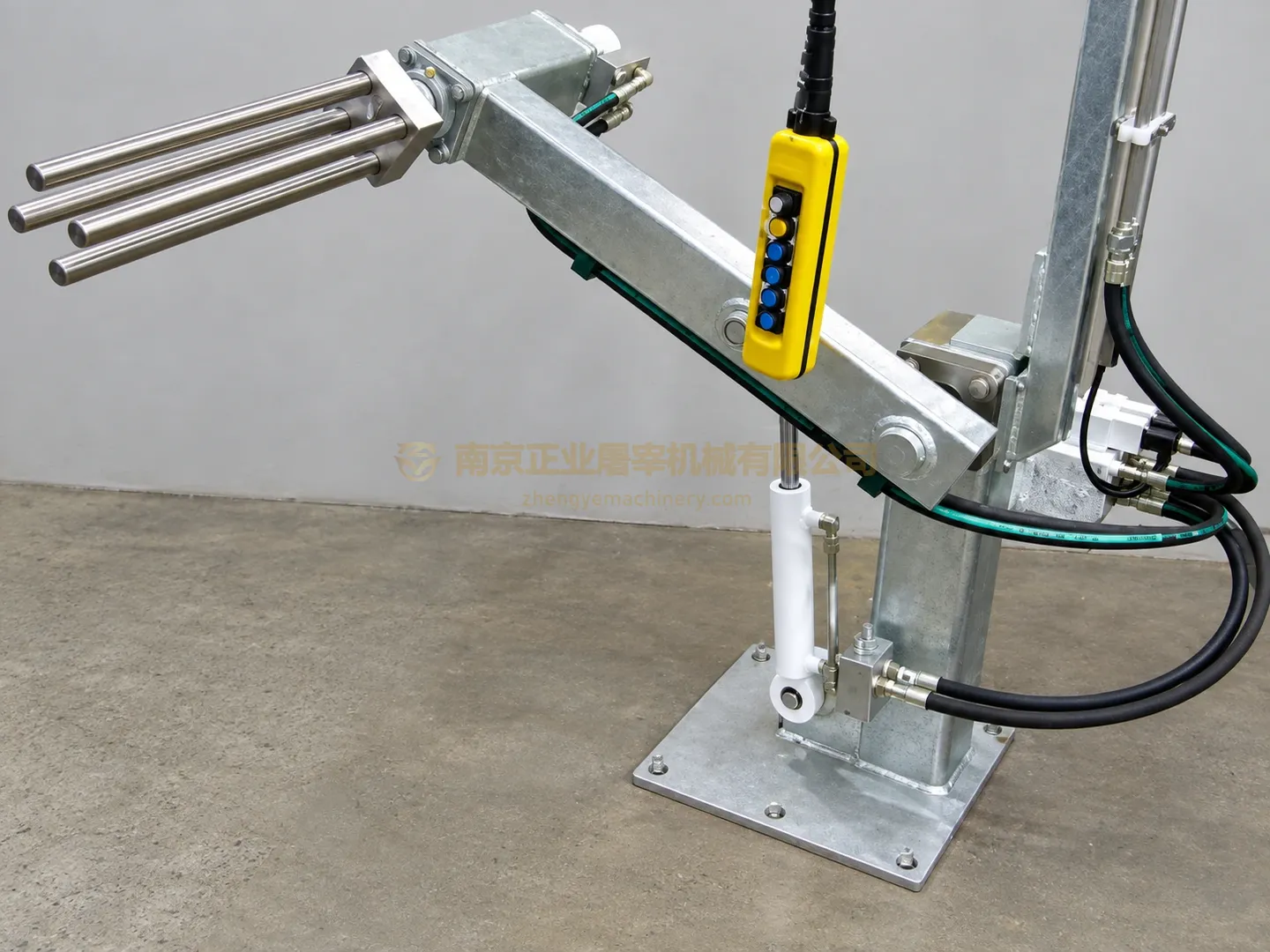
SD roller and GD sheep dehider configurations
The following details come from the company’s cattle and sheep brochure, pages 21–22. They identify configuration families; the selected model and its interfaces must be stated in the equipment proposal.
| Configuration | SD roller dehider family | GD dehider family |
|---|---|---|
| Brochure models | SD01, SD01R, SD04, SD06 and SD08. | GD01 and GD02. |
| Illustrated arrangement | Roller equipment, with overhead and single-station examples shown in the brochure. | Linkage and front-rod arrangement with a pendant controller, as shown in the equipment photograph. |
| Drive and material | Hydraulic drive; stainless steel. | Hydraulic drive; stainless steel. |
| Rail condition | The brochure lists automatic lines and manual rails; match the selected model to the actual hanging and transfer geometry. | The brochure lists manual rails or automatic lines below 5 m/min; confirm the selected arrangement against the actual line speed. |
| Preparation condition | The brochure notes that brisket pre-skinning is not required for this family. Agree the remaining skin-opening and loosening work for the selected arrangement. | The brochure specifies pre-skinning to the waist before mechanical removal. |
Confirm model-specific dimensions, mounting loads, motor power, hydraulic connections and working rate in the quotation and approved drawing. The brochure does not give these details for each model, and the photographs do not establish a guaranteed output or suitability for every sheep or goat type.
Match the machine to the animal and the work station
- Animal supply: identify sheep, goats or the intended mixture, with the size range and fleece or hair condition. Request a selection review for that supply rather than assuming the same setup covers every animal.
- Preparation and suspension: show where opening and loosening are completed, how the carcass is held, and the rail level and hanging position at the machine.
- Pelt removal and the next handoff: mark the pelt exit and collection point separately from the exposed carcass and the receiving dressing or rehanging station.
- Installation and maintenance: provide the measured working envelope, supports, available services and access to controls, cleaning points and service components.
These interfaces also affect hygiene: keep the fleece or hair side of the removed pelt away from exposed meat and provide a defined route to the next dressing station. This follows the skinning principles in FAO’s guidance for small ruminants; operating procedures and local approval requirements must be agreed for the project.
Define both transfer ends
| Interface | What the project should define |
|---|---|
| Incoming | Pre-skinning, head handling and body preparation |
| Outgoing | Rehanging and clean-area evisceration |
| Building and services | Measured location, supports, available services, operator access and cleaning/maintenance space. |
| Review responsibility | Process team for the equipment arrangement; competent veterinary authority and any appointed halal certifier for the operating controls. |
Scope and image limitations
The SD roller and GD arrangements shown in the company brochure are both hydraulically driven. Selection requires the actual animal supply and rail arrangement; a photograph cannot establish performance, throughput or compatibility with all goat types. Agree the preparation and hide-removal boundary before comparing the equipment options.
Before ordering
Ask the project team to mark this equipment on the building drawing, identify the upstream and downstream handoffs and list any assumptions still unresolved. The equipment schedule should distinguish supplied machinery from local fabrication, civil works, utilities and approval tasks.
At review, compare the proposed arrangement against the actual sheep and goat supply, the planned work pattern and the hygiene routes. Document any change of animal mix or operating route before treating an earlier equipment proposal as applicable to the new case.
View the process position · Prepare the project brief · Discuss equipment scope