
Select equipment after the route and animal mix
This sheep slaughterhouse equipment catalog covers the company’s seven workflow groups. A sheep line and a goat line can require different handling or preparation settings. Give the proposed animal range and the selected halal or non-halal operating route before asking for a configuration.
Choose the next step for your equipment brief
- Complete line: Check the sheep slaughter process alongside the building and rail layout inputs.
- Dehider selection: Compare SD/GD configurations and preparation conditions in the sheep skinning machine guide.
- Existing-line upgrade: Include retained equipment, measured interfaces and the proposed sheep/goat mix in the equipment enquiry brief.
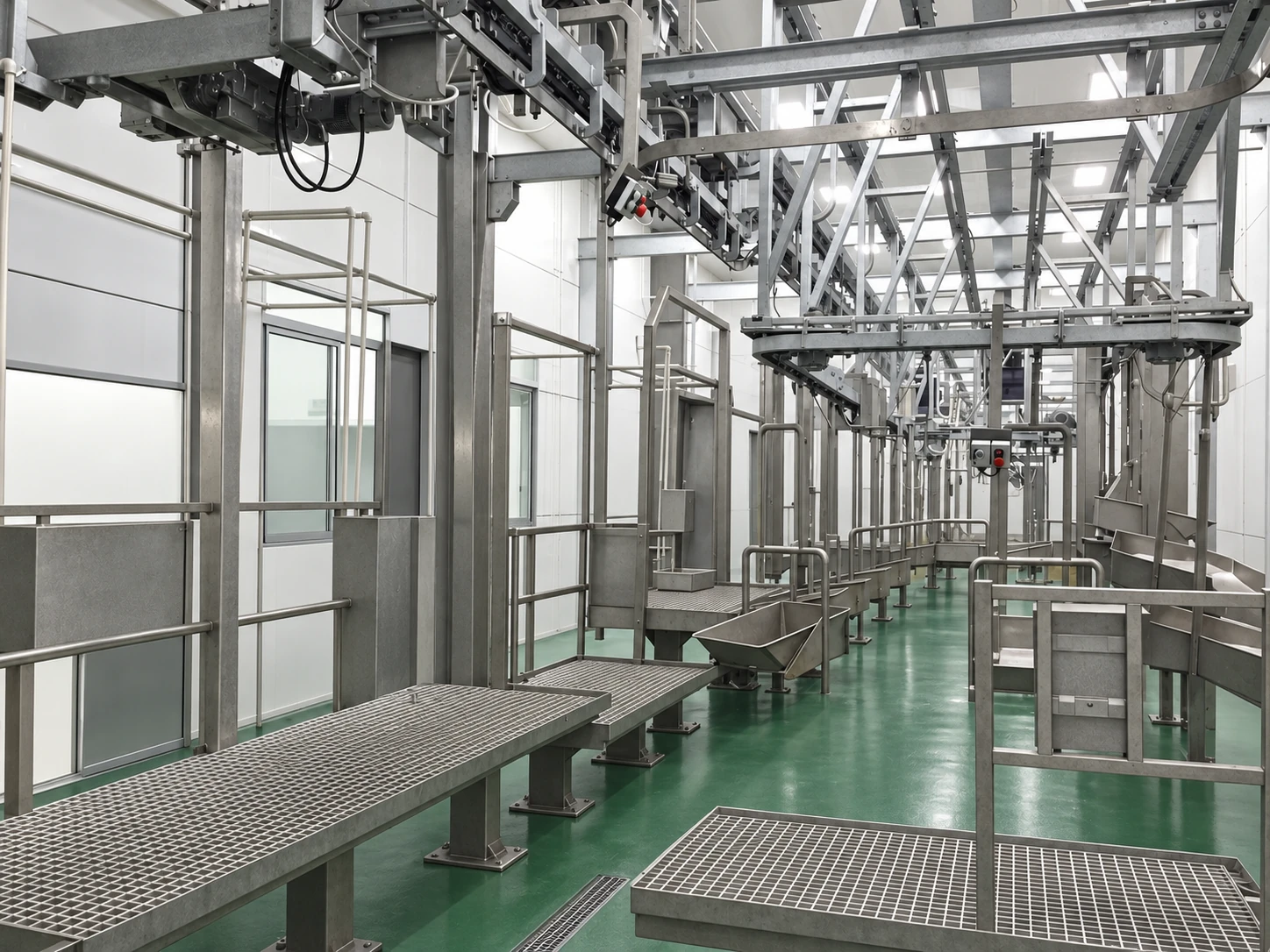
Slaughter, hoisting & bleeding
Resolve the chosen slaughter route before fixing the first transfer. Locate the animal-handling interface, lifting arrangement and collection area so the carcass can move into the bleeding rail without bypassing the agreed checks.
- Selection information
- Confirm the species and animal-size range, the approved method, personnel access and the evidence required before dressing.
- Equipment interface
- Slaughter-method interface; hoist; bleeding rail
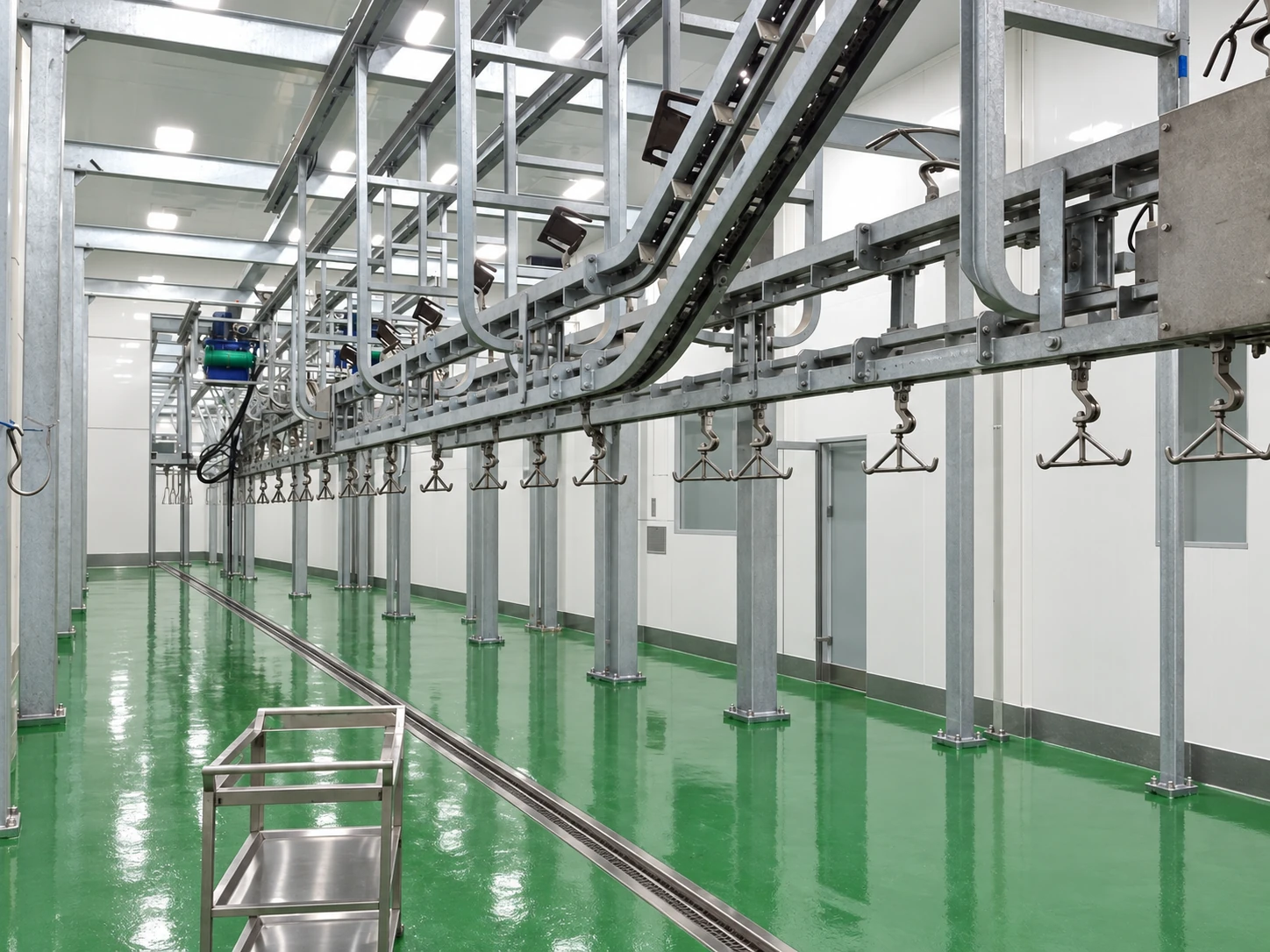
Horizontal pre-skinning
Place the preliminary skin-opening work positions in relation to the incoming hanging arrangement and the following preparation station. Check working reach, sanitation access and the route for removed material before allocating the rail position.
- Selection information
- Record which cuts and manual tasks belong at this position for the selected sheep or goat supply.
- Equipment interface
- Pre-skinning work position; transfer rail; operator access
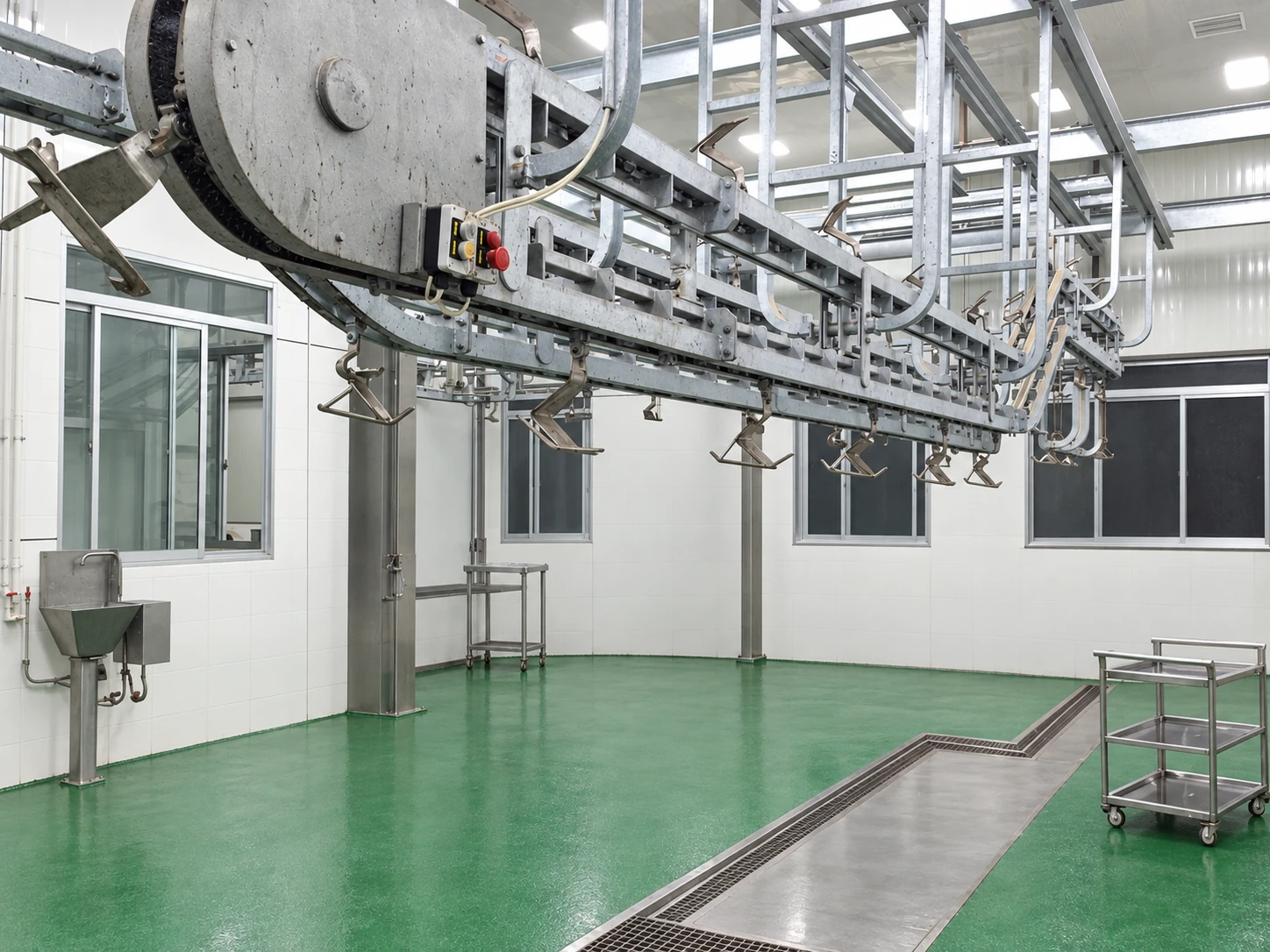
Head removal & body preparation
Head handling, brisket-skin opening and flank/shoulder preparation are grouped before the dehider. Design these positions around the pulling arrangement that will be selected, rather than adding an unrelated manual station afterwards.
- Selection information
- Confirm the preparation sequence, head route and operator access against the chosen dehider and animal mix.
- Equipment interface
- Head-removal position; skin-preparation interfaces; dressing rail
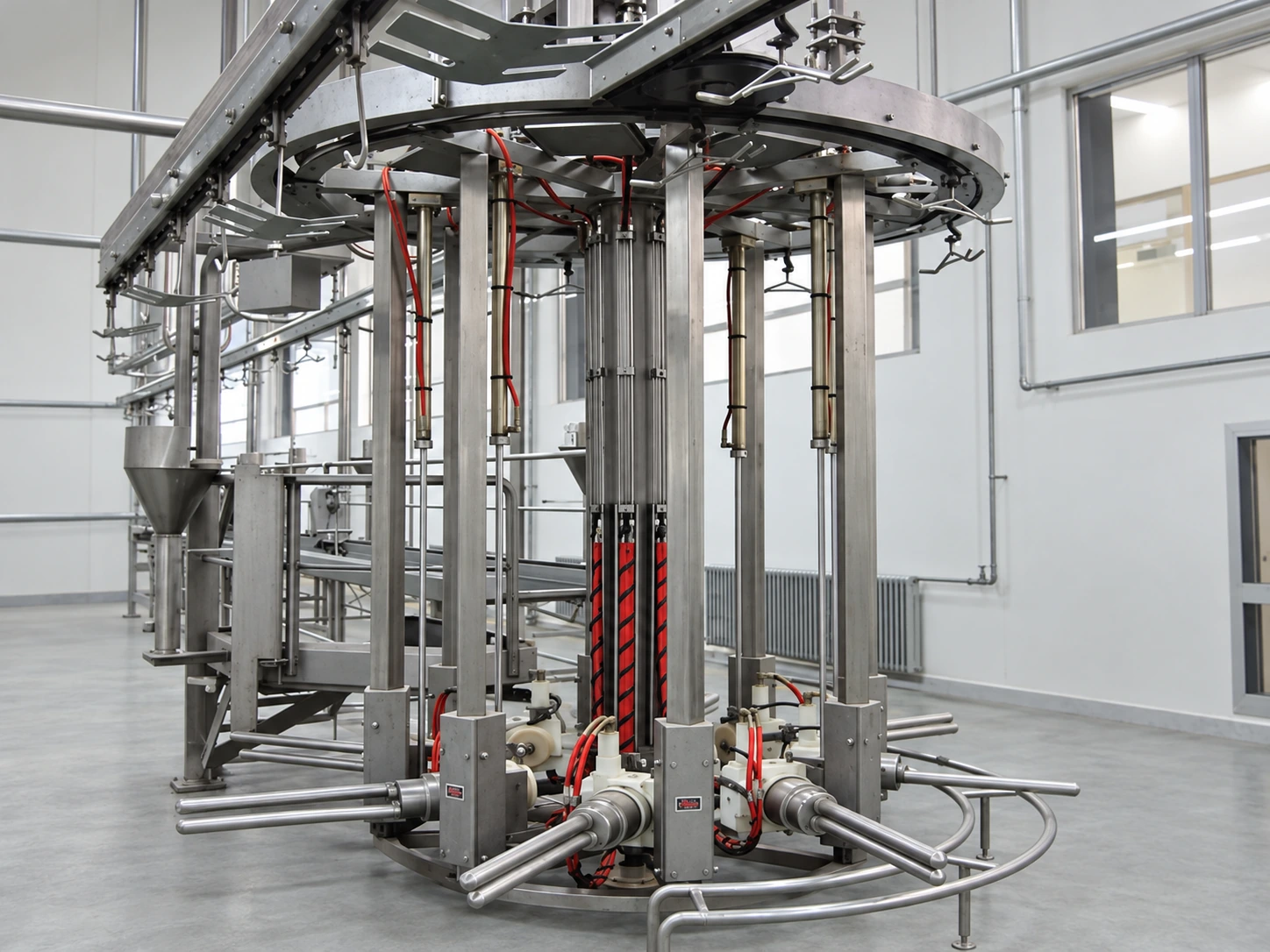
Mechanical dehiding
The SD roller dehider family and GD dehiders both use hydraulic drive. Compare their preparation and rail requirements with the proposed animal range, hanging geometry and hide exit. Keep the skin-removal route away from exposed dressed product and allow equipment access for cleaning and maintenance.
- Selection information
- Check sheep and goat suitability separately, including the proposed animal-size range and upstream preparation.
- Equipment interface
- Hydraulically driven SD or GD sheep dehider; hide-handling interface
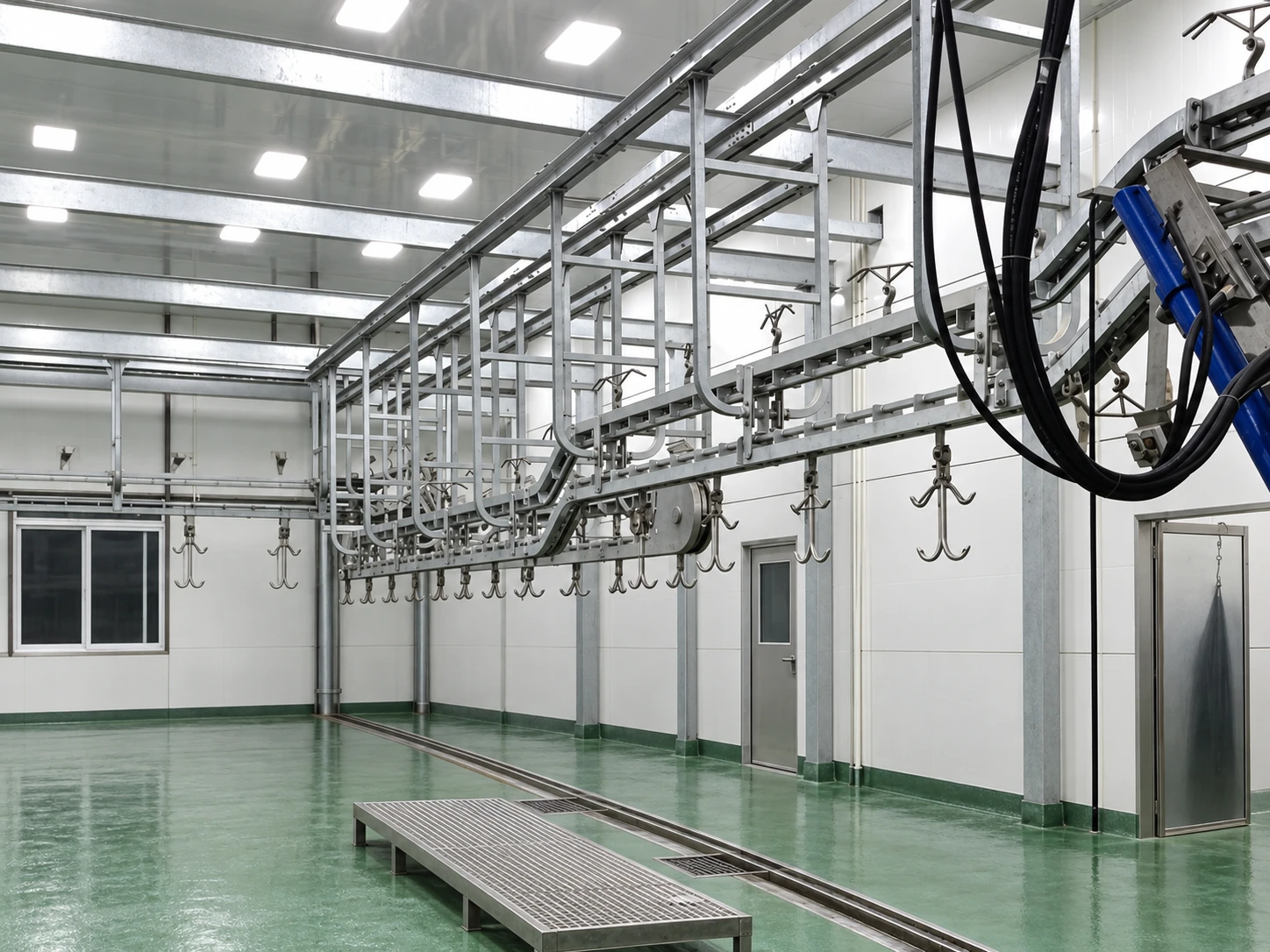
Hind-leg rehanging & evisceration
Set the rehanging handoff before the clean-area dressing work. Connect the operator platform with the offal receiving route and define how carcass identity remains related to the material presented for inspection.
- Selection information
- Agree the clean-area boundary, working access and offal receiving/identification arrangement with the process and veterinary teams.
- Equipment interface
- Rehanging position; evisceration work position; offal interface
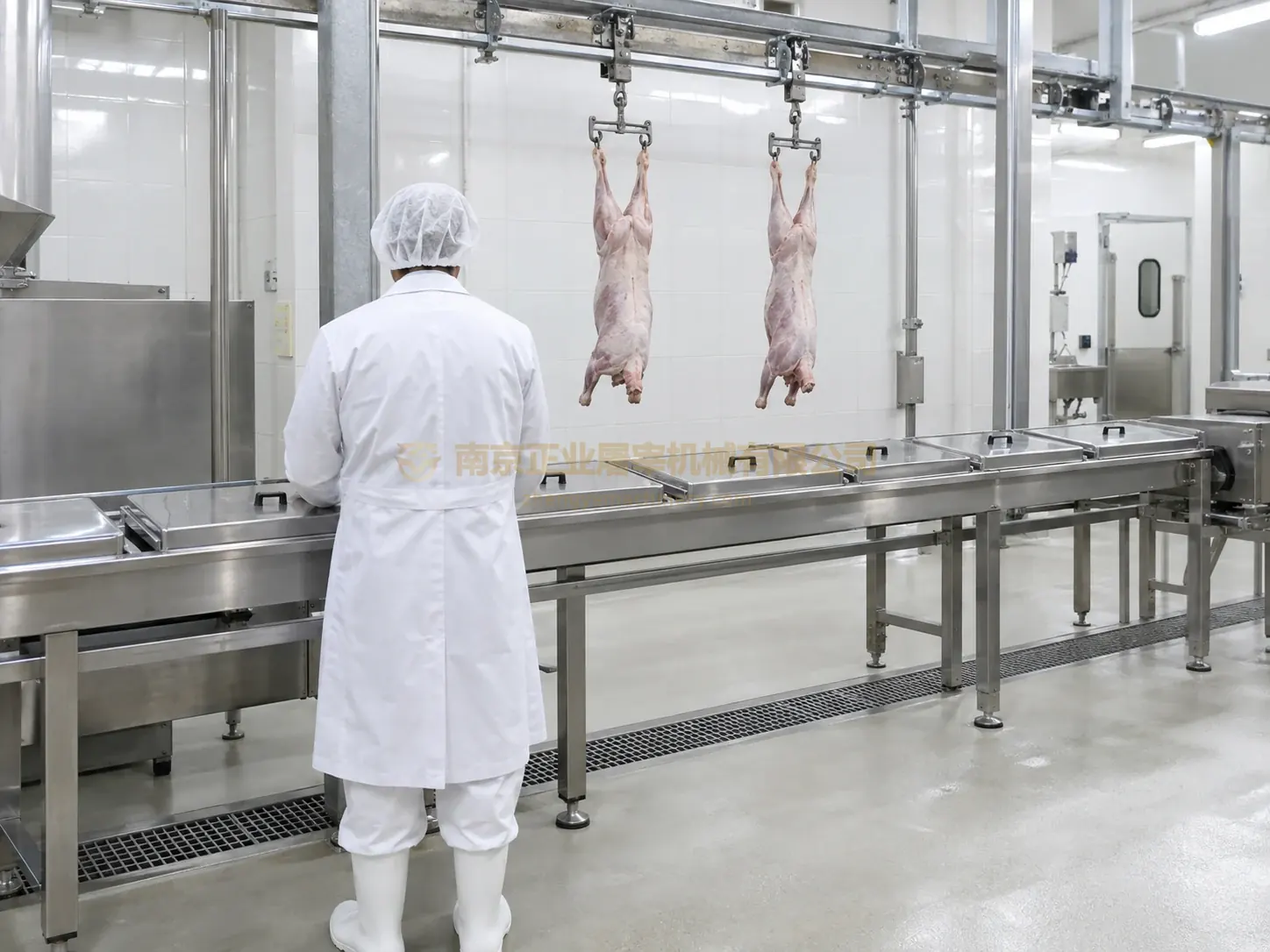
Veterinary inspection & trimming
Reserve inspection work positions after evisceration and before the chilling transfer. Keep the carcass route, related offal and any held material accessible to the veterinary workflow, with trimming work located around that decision.
- Selection information
- Have the competent veterinary team define release, hold and reject routes, rather than treating inspection as an empty space on the rail.
- Equipment interface
- Inspection work position; trimming position; platform and conveyor interface
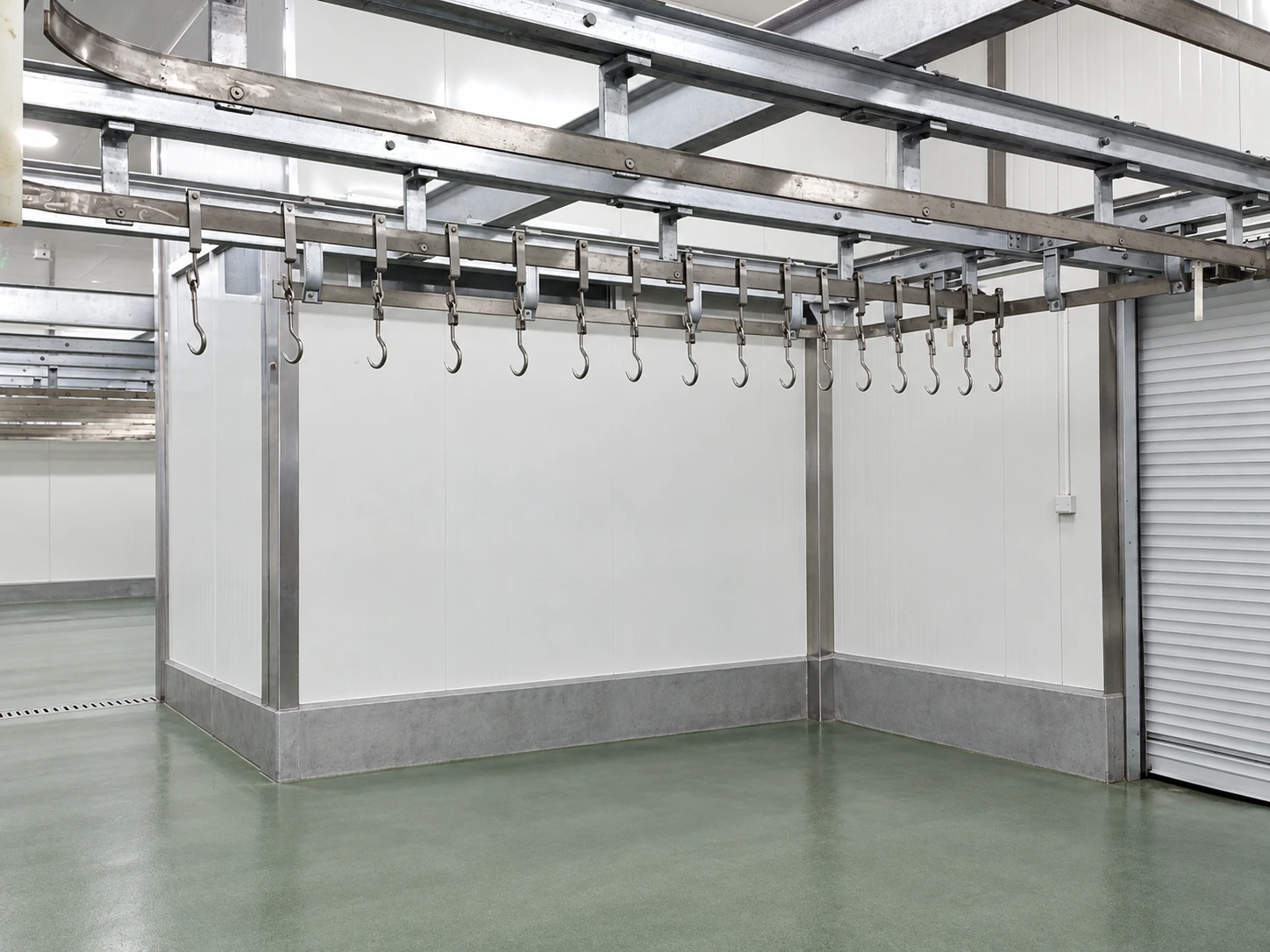
Rail transfer & chilling interface
Coordinate the final hanging arrangement, transfer rail and cold-room doorway. The mechanical handoff must be reviewed alongside the refrigeration scope and the intended chilled-product route beyond the slaughter line.
- Selection information
- Measure doorway clearances, rail/support geometry and the next product route. Define who supplies refrigeration and cold-room controls.
- Equipment interface
- Transfer rail; hanging hooks; chilling interface
A useful equipment schedule
- List the machine or work-position function and its incoming/outgoing transfers.
- Separate mechanical equipment from civil works, utilities, refrigeration and operating approvals.
- State the retained equipment and any measured interface if this is an upgrade.
- Assign documentation, installation and commissioning responsibilities to the project parties.