
Where this equipment fits
Connect the rehanging position, operator access and offal receiving route in the clean-area sequence.
The equipment brief must state whether the project uses the halal route or non-halal conventional route. Downstream engineering can share interfaces, but the entry method and operating controls require their own review.
Information needed for selection
- The hanging arrangement delivered by dehiding and the proposed hind-leg rehanging handoff.
- Working reach and task allocation for the anticipated animal range.
- Offal receiving, identification, veterinary presentation and held-material movement.
- Hand washing, tool sanitation, drainage, cleaning access and the clean-area boundary.
Define both transfer ends
| Interface | What the project should define |
|---|---|
| Incoming | Dehiding outlet and rehanging |
| Outgoing | Veterinary inspection and trimming |
| Building and services | Measured location, supports, available services, operator access and cleaning/maintenance space. |
| Review responsibility | Process team for the equipment arrangement; competent veterinary authority and any appointed halal certifier for the operating controls. |
Scope and image limitations
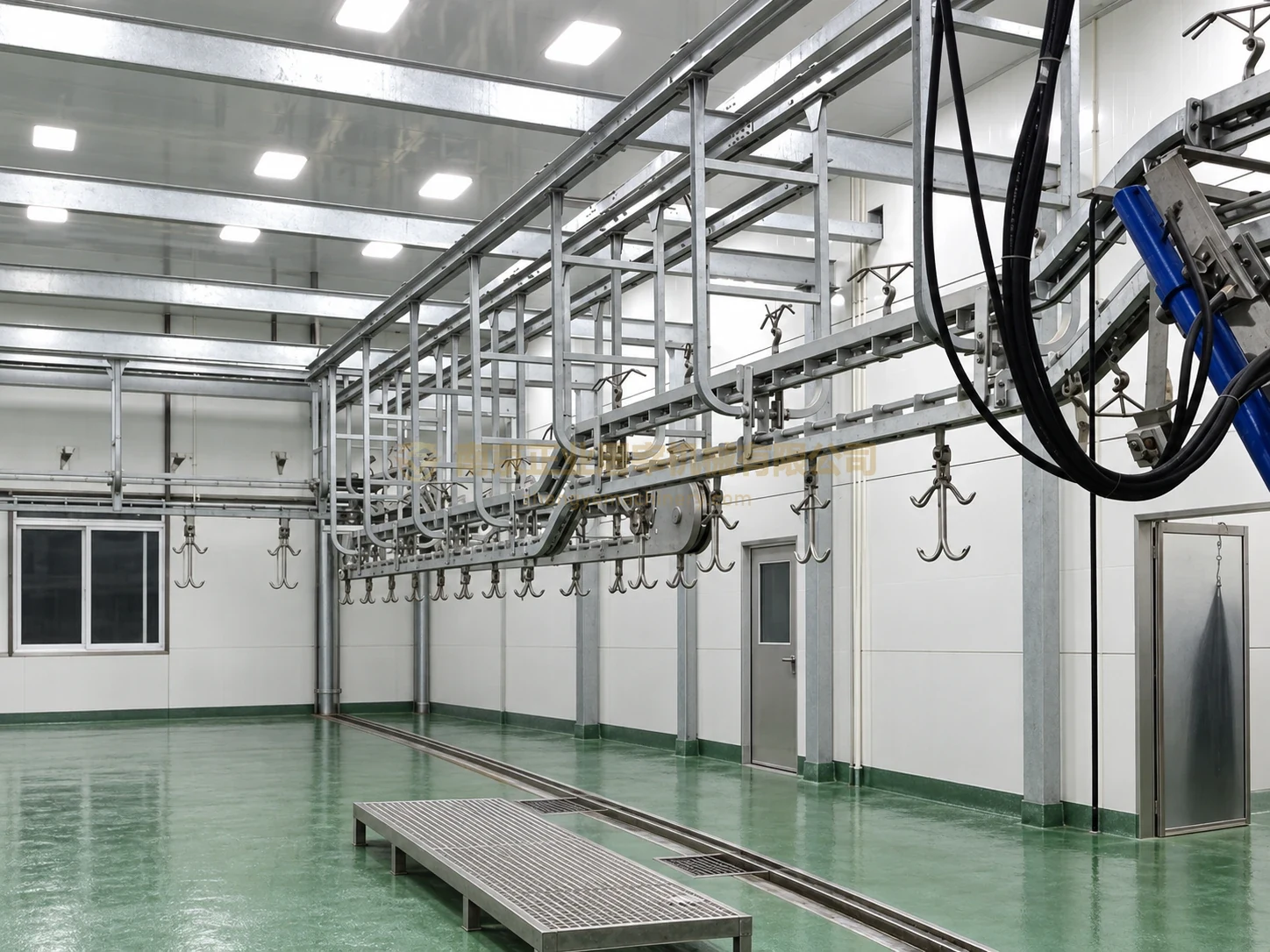
The illustrated rail and platform arrangement represents equipment interfaces for planned rehanging and evisceration. The veterinary team must define how the carcass and related offal are presented and identified; that operating procedure is not established by platform geometry alone.
Before ordering
Ask the project team to mark this equipment on the building drawing, identify the upstream and downstream handoffs and list any assumptions still unresolved. The equipment schedule should distinguish supplied machinery from local fabrication, civil works, utilities and approval tasks.
At review, compare the proposed arrangement against the actual sheep and goat supply, the planned work pattern and the hygiene routes. Document any change of animal mix or operating route before treating an earlier equipment proposal as applicable to the new case.
View the process position · Prepare the project brief · Discuss equipment scope