
Define the upgrade by the problem and the retained equipment
Use this solution when you have an operating or existing sheep/goat facility and want to replace a machine, improve a transfer or review a dressing section. Identify the requirement to investigate and measure the existing interfaces before choosing replacement equipment. Preserve the selected halal or non-halal route throughout the technical review.
Connect the operating requirement to the replacement decision
| Customer requirement to investigate | Evidence and measurements needed | Technical selection to review |
|---|---|---|
| Preparation and dehiding fit | Animal range, current preparation tasks, dehider type and suspension/transfer geometry. | Retain or replace the dehider; adjust manual positions and incoming/outgoing connections. |
| Access around dressing work | Working positions, task allocation, sanitation, offal receiving and rail clearances. | Platform and rehanging interfaces with usable operator, cleaning and inspection access. |
| Transfer into chilling | Rail elevation, hooks, cold-room doors and the cold-chain scope. | Mechanical transfer changes coordinated with the refrigeration/local-works party. |
| Expansion or changed animal supply | Proposed animal mix and owner’s operating pattern alongside present machinery and services. | Reassess the connected route and constraints instead of treating a replacement machine as the whole expansion plan. |
| Changed operating route | Current approval/certification scope and the proposed new method or premises/tool boundary. | Local veterinary/welfare and certifier review before any affected equipment is ordered. |
Make retained and replaced scope visible
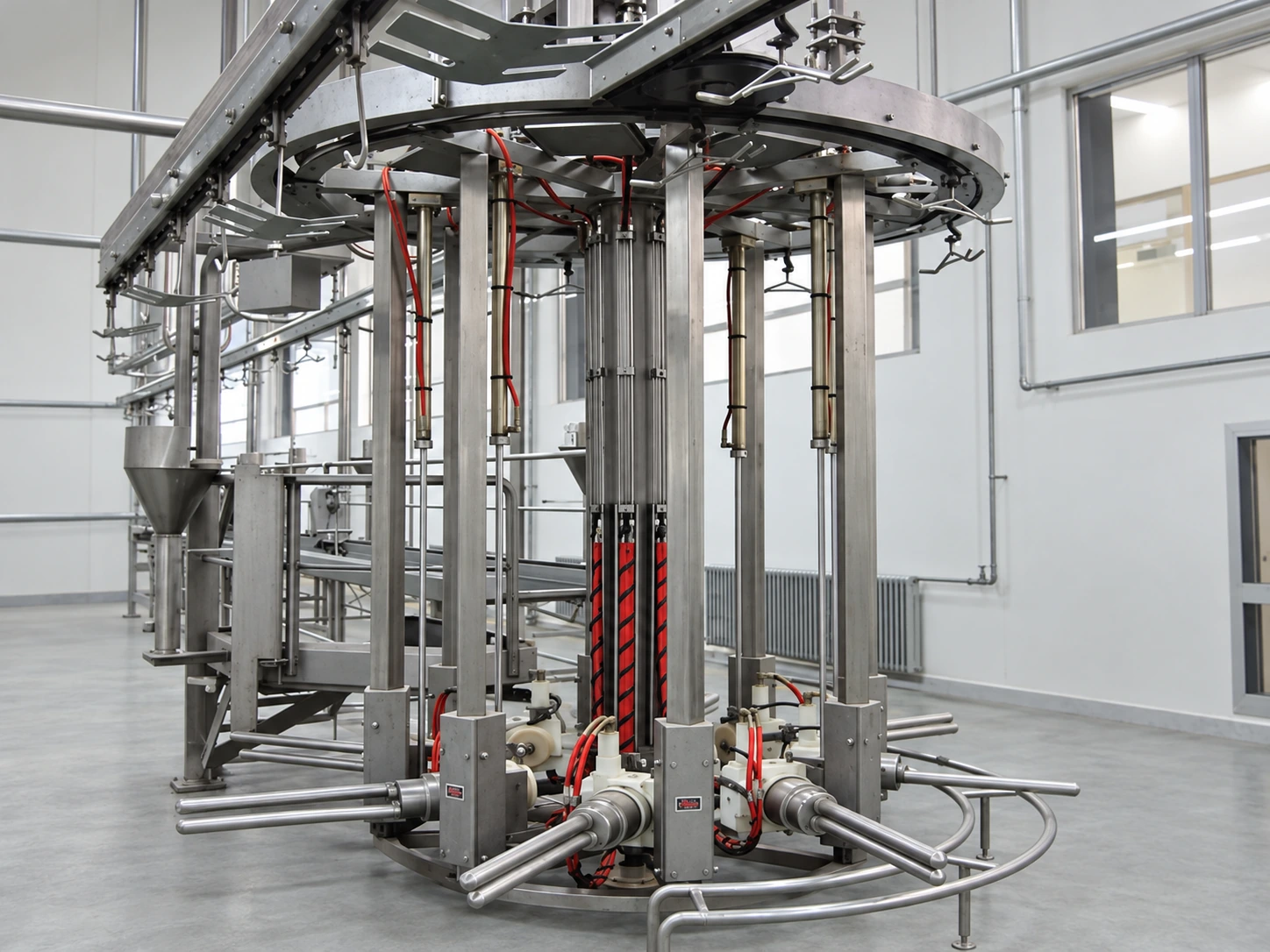
Mark each retained machine, rail support and local utility on the survey. The replacement schedule should name its incoming transfer, outgoing transfer, service connections and the work positions it affects. Attach site photographs as evidence of the current interface and distinguish them from supplier equipment-reference images.
Plan installation and restart responsibilities
Agree the work access, temporary boundaries, utility isolation, cleaning and checks against the approved scope with the owner and installer. Record the actual site conditions before assigning a shutdown or restart plan. Include any effect on the veterinary process or halal scope in that review.
What the equipment proposal should make reviewable
| Purchase output | What to check |
|---|---|
| Process and layout basis | Selected existing or revised authority-reviewed route, animal range, building geometry and outstanding assumptions. |
| Equipment schedule | Supplied machines/work positions, quantities to agree, hanging/rail components and both transfer ends. |
| Interface responsibilities | Local works, utilities, drainage, sanitation, refrigeration and the parties responsible for them. |
| Delivery and acceptance scope | Agreed drawings/documentation, installation responsibilities and checks against the approved supply scope. |
Use the same boundary when comparing quotations. Ask the supplier and project team to identify inclusions, exclusions and decisions still awaiting site or authority review.
Compare project and installation references with this purchase
Use project and installation references to compare the documented animal type, equipment section, site interfaces and reported status with your retained equipment, interface measurements and replacement objective. Check what the available photographs or records establish, then carry the differences into your own equipment brief.
- Identify the sheep/goat scope and the operating route recorded for the reference.
- Match the supplied section and building constraints to your proposed equipment boundary.
- Check the documented delivery status and the date/scope of the evidence before interpreting an equipment photograph as an installed result.
- Carry differences in animal supply, utilities, veterinary review and any halal requirements into your own proposal.
Review project and installation references
Design scenarios help organize unknown requirements; their labels distinguish them from delivered-project records.
What to send for an upgrade proposal
- Current route and the limitation you want the review to address.
- Dimensioned rail and machinery survey, with photographs of both transfer ends.
- Sheep/goat range, preparation tasks and intended product route.
- Available utilities, maintenance access and local-installation boundary.
- Reviewers and agreed checks for the completed replacement scope.
Prepare an upgrade purchasing brief → · Compare the equipment groups