
Purchase a connected skin-removal and dressing section
Use this solution when the purchase centres on sheep/goat skin preparation, a dehider and the handoff into clean dressing. Specify the manual tasks, hanging arrangement and hide/product routes together. The equipment choice depends on the actual animal supply and the existing or proposed rail interfaces.
Move from the animal and product requirement to the dehider choice
| Customer requirement | Inputs to establish | Technical selection |
|---|---|---|
| A defined sheep/goat supply | Species, animal-size, fleece/hair and horn ranges plus preparation tasks. | Check the roller or hydraulic dehider and its hanging geometry for the proposed supply. |
| Compatible preparation work | Head handling, brisket/flank/shoulder preparation and the chosen pulling arrangement. | Allocate manual positions, tool sanitation and working access before the machine. |
| A controlled hide exit | Hide destination, collection method and separation from exposed product. | Locate hide-handling space, cleaning and local collection interfaces. |
| A workable clean-area handoff | Carcass suspension after dehiding, hind-leg rehanging and offal receiving route. | Connect the outgoing transfer with the dressing platforms, inspection and clean-product rail. |
| An agreed operating scope | Halal certifier or conventional veterinary/welfare requirements for the section. | Confirm dedicated tools/premises and the permitted route before assuming shared equipment. |
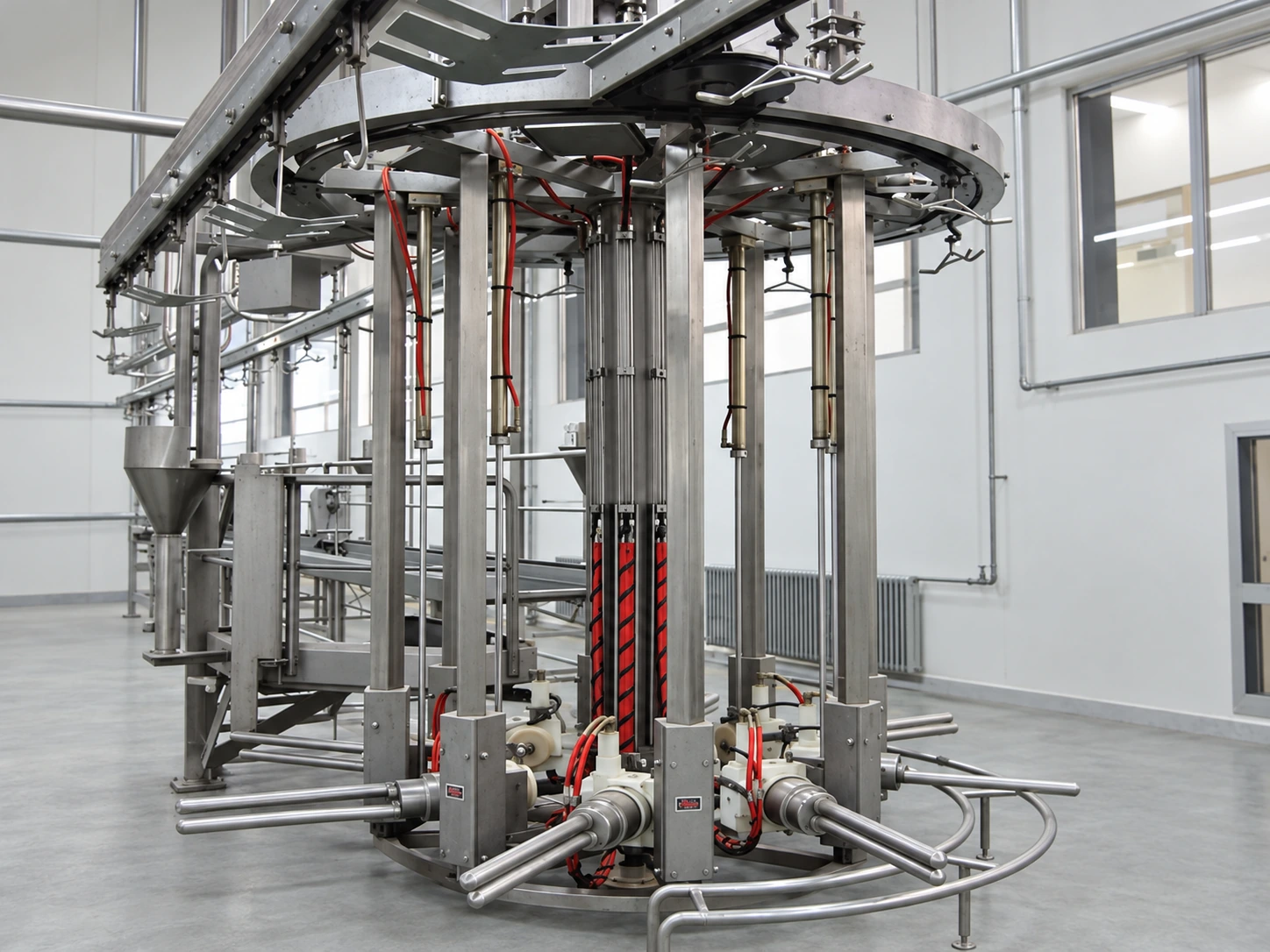
Compare roller and hydraulic options as part of the section
Both dehider arrangements are presented. Compare them with the proposed animal range, upstream preparation and incoming/outgoing rail geometry. State the desired skin-removal and pelt-handling outcome as an acceptance requirement to agree; the reference photograph supplies no project result or performance figure.
See the dehider selection guide, pre-skinning positions and rehanging and dressing interfaces for the equipment-specific inputs.
What the equipment proposal should make reviewable
| Purchase output | What to check |
|---|---|
| Process and layout basis | Selected halal or non-halal route, animal range, building geometry and outstanding assumptions. |
| Equipment schedule | Supplied machines/work positions, quantities to agree, hanging/rail components and both transfer ends. |
| Interface responsibilities | Local works, utilities, drainage, sanitation, refrigeration and the parties responsible for them. |
| Delivery and acceptance scope | Agreed drawings/documentation, installation responsibilities and checks against the approved supply scope. |
Use the same boundary when comparing quotations. Ask the supplier and project team to identify inclusions, exclusions and decisions still awaiting site or authority review.
Compare project and installation references with this purchase
Use project and installation references to compare the documented animal type, equipment section, site interfaces and reported status with your animal range, preparation tasks and dehiding/dressing boundary. Check what the available photographs or records establish, then carry the differences into your own equipment brief.
- Identify the sheep/goat scope and the operating route recorded for the reference.
- Match the supplied section and building constraints to your proposed equipment boundary.
- Check the documented delivery status and the date/scope of the evidence before interpreting an equipment photograph as an installed result.
- Carry differences in animal supply, utilities, veterinary review and any halal requirements into your own proposal.
Review project and installation references
Design scenarios help organize unknown requirements; their labels distinguish them from delivered-project records.
Define the module before ordering
- Supplied dehider and mechanical transfers, with the proposed configuration stated.
- Manual platforms/work positions, hanging components and local-fabrication responsibilities.
- Utilities, cleaning, hide collection and maintenance access.
- Both incoming and outgoing rail handoffs with any retained machinery.
- Agreed documentation and checks against the section scope.
Prepare the section purchasing brief → · Choose the operating route