
Choose the slaughter route before the shared equipment sequence
Sheep and goats can share downstream engineering interfaces when the proposed animal range is confirmed. The beginning of the line still needs an explicit halal or non-halal decision. A general equipment photograph cannot answer that decision for the facility.
Seven equipment stages and their handoffs
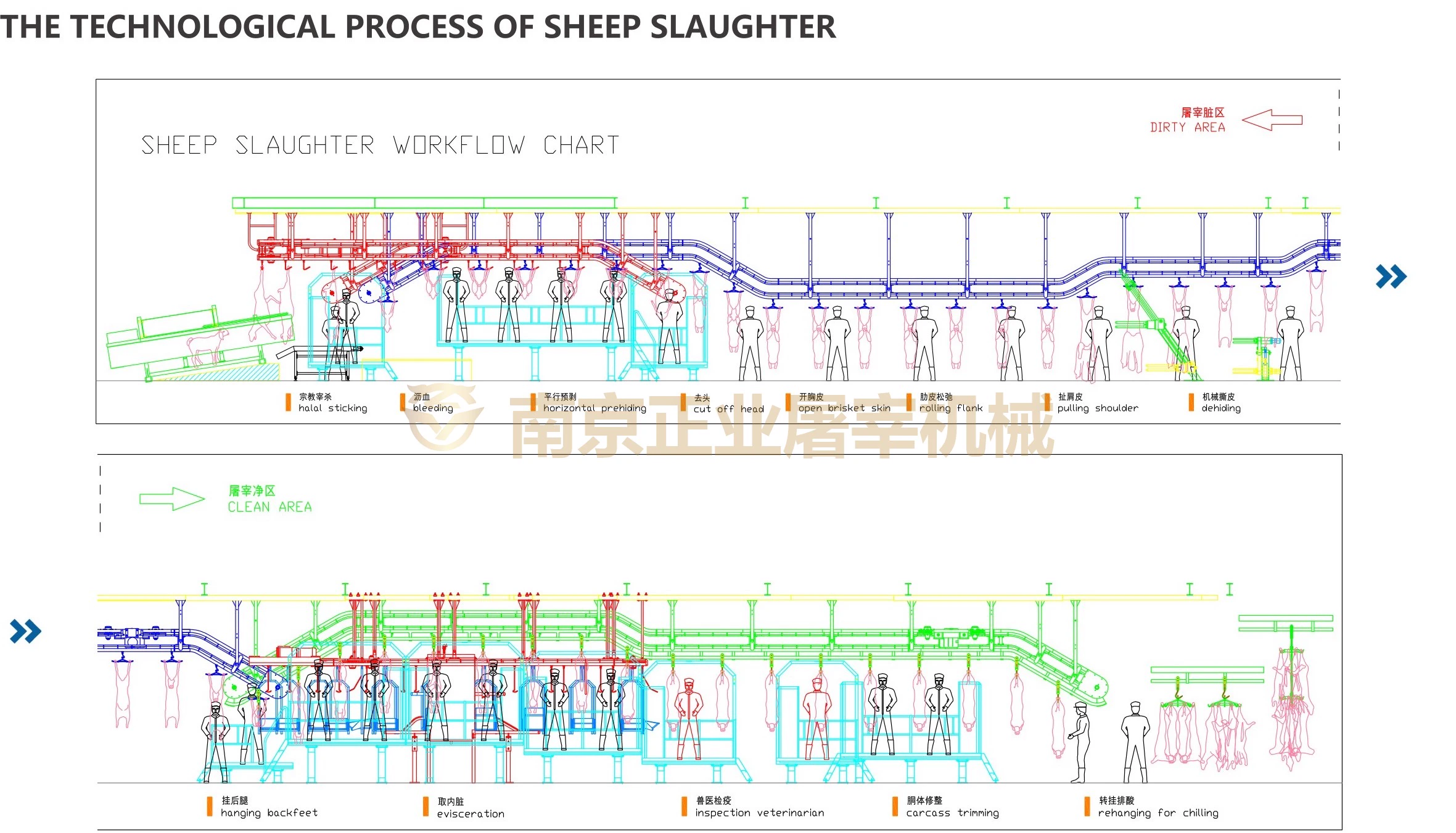
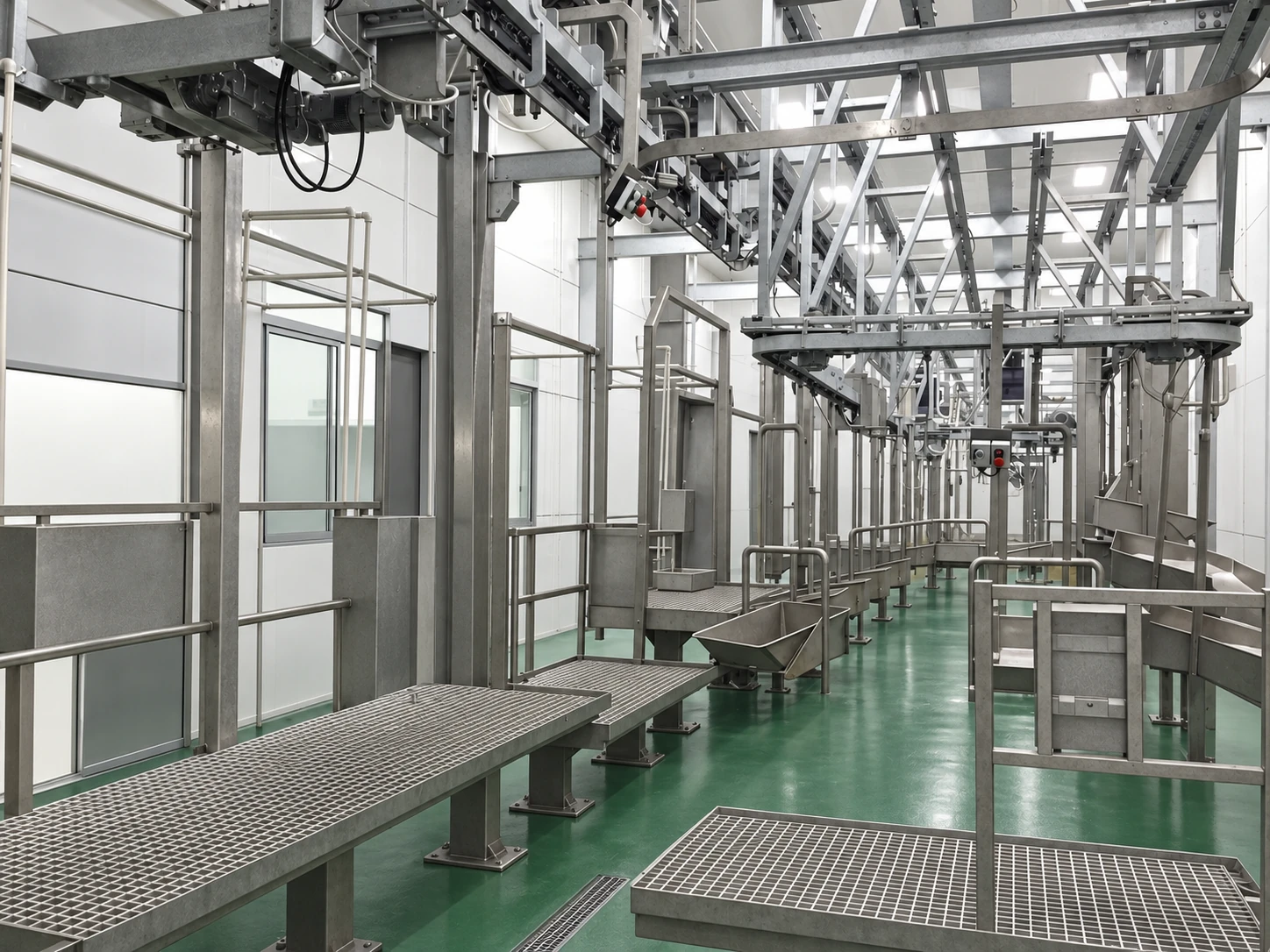
01 / Slaughter, hoisting & bleeding
- Task
- Resolve the chosen slaughter route before fixing the first transfer. Locate the animal-handling interface, lifting arrangement and collection area so the carcass can move into the bleeding rail without bypassing the agreed checks.
- Equipment
- Slaughter-method interface; hoist; bleeding rail
- Site check
- Confirm the species and animal-size range, the approved method, personnel access and the evidence required before dressing.
Incoming: Approved receiving and slaughter-method arrangement
Next interface: Horizontal pre-skinning
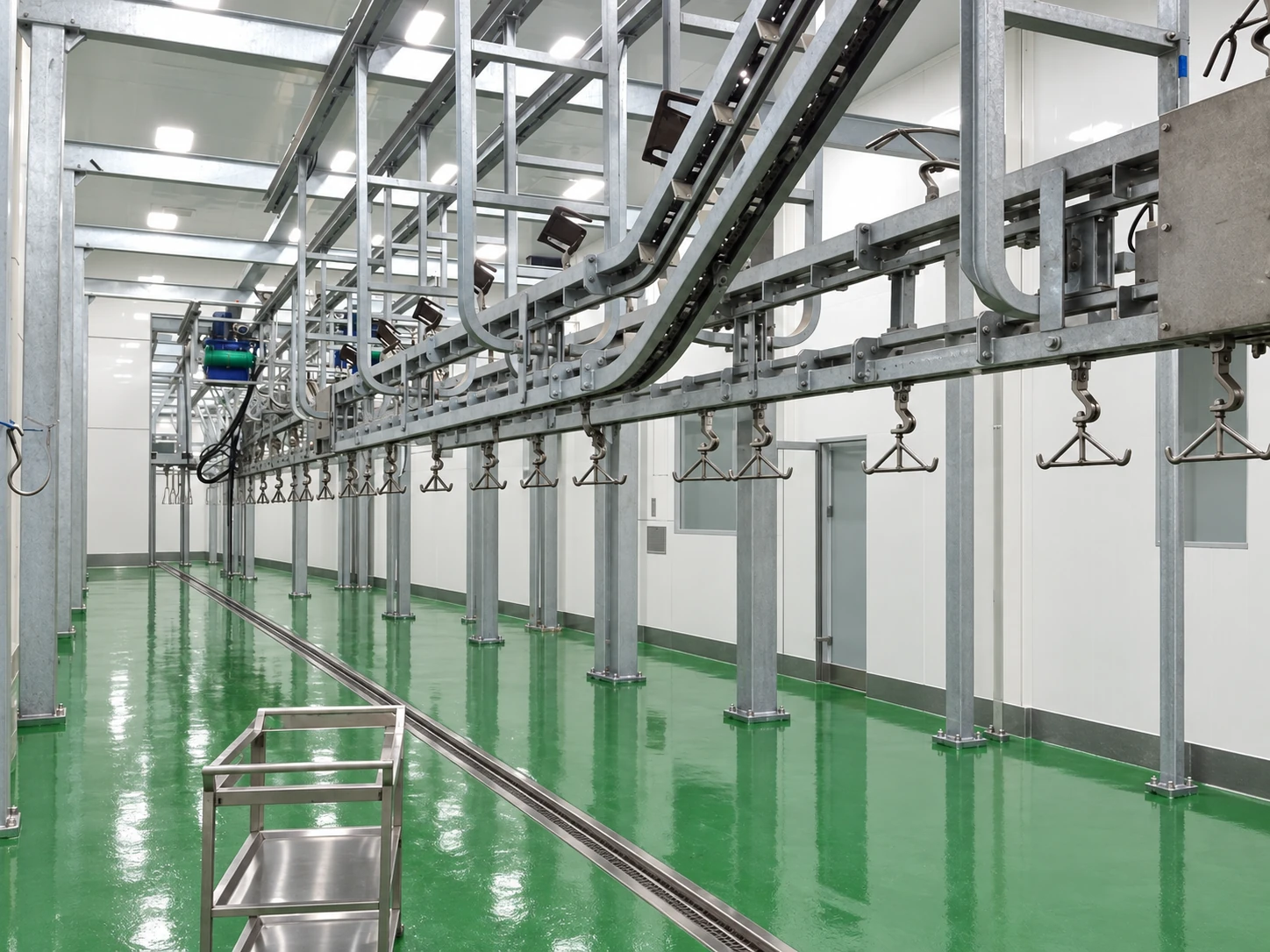
02 / Horizontal pre-skinning
- Task
- Place the preliminary skin-opening work positions in relation to the incoming hanging arrangement and the following preparation station. Check working reach, sanitation access and the route for removed material before allocating the rail position.
- Equipment
- Pre-skinning work position; transfer rail; operator access
- Site check
- Record which cuts and manual tasks belong at this position for the selected sheep or goat supply.
Incoming: Slaughter, hoisting & bleeding
Next interface: Head removal & body preparation
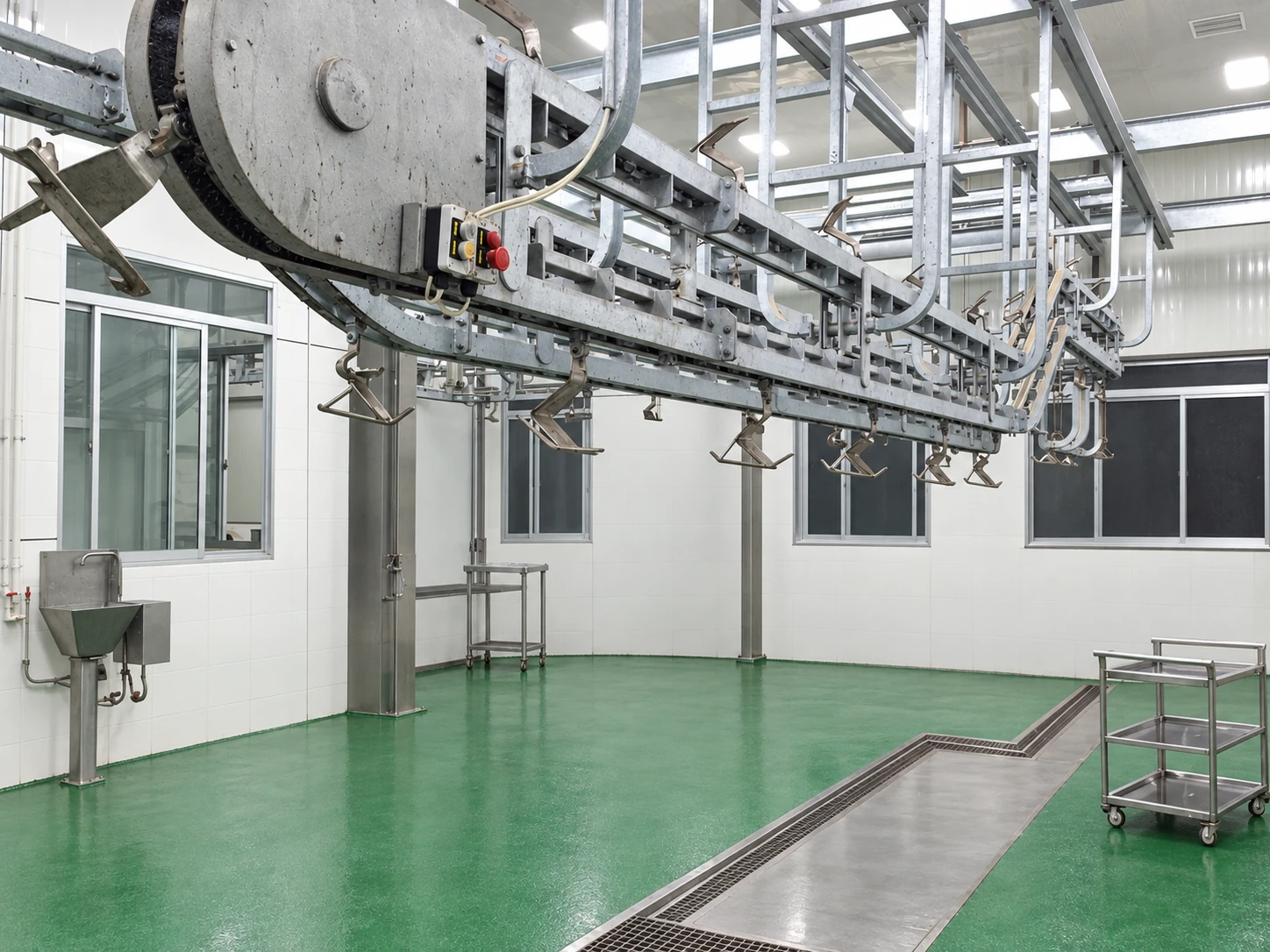
03 / Head removal & body preparation
- Task
- Head handling, brisket-skin opening and flank/shoulder preparation are grouped before the dehider. Design these positions around the pulling arrangement that will be selected, rather than adding an unrelated manual station afterwards.
- Equipment
- Head-removal position; skin-preparation interfaces; dressing rail
- Site check
- Confirm the preparation sequence, head route and operator access against the chosen dehider and animal mix.
Incoming: Horizontal pre-skinning
Next interface: Mechanical dehiding
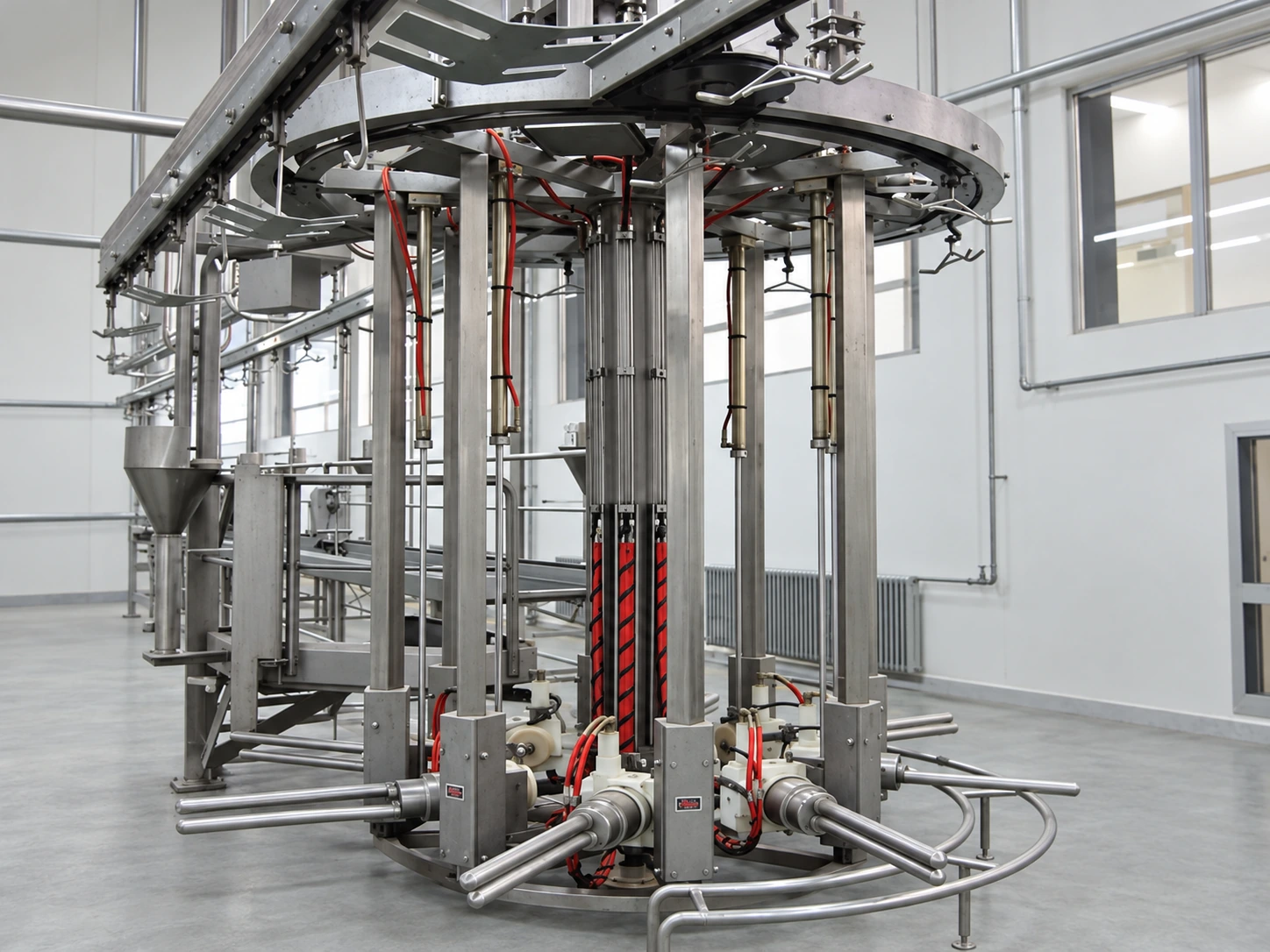
04 / Mechanical dehiding
- Task
- Compare roller and hydraulic dehider arrangements with the prepared carcass, hanging geometry and hide exit. Keep the skin-removal route away from exposed dressed product and allow equipment access for cleaning and maintenance.
- Equipment
- Roller or hydraulic sheep dehider; hide-handling interface
- Site check
- Check sheep and goat suitability separately, including the proposed animal-size range and upstream preparation.
Incoming: Head removal & body preparation
Next interface: Hind-leg rehanging & evisceration
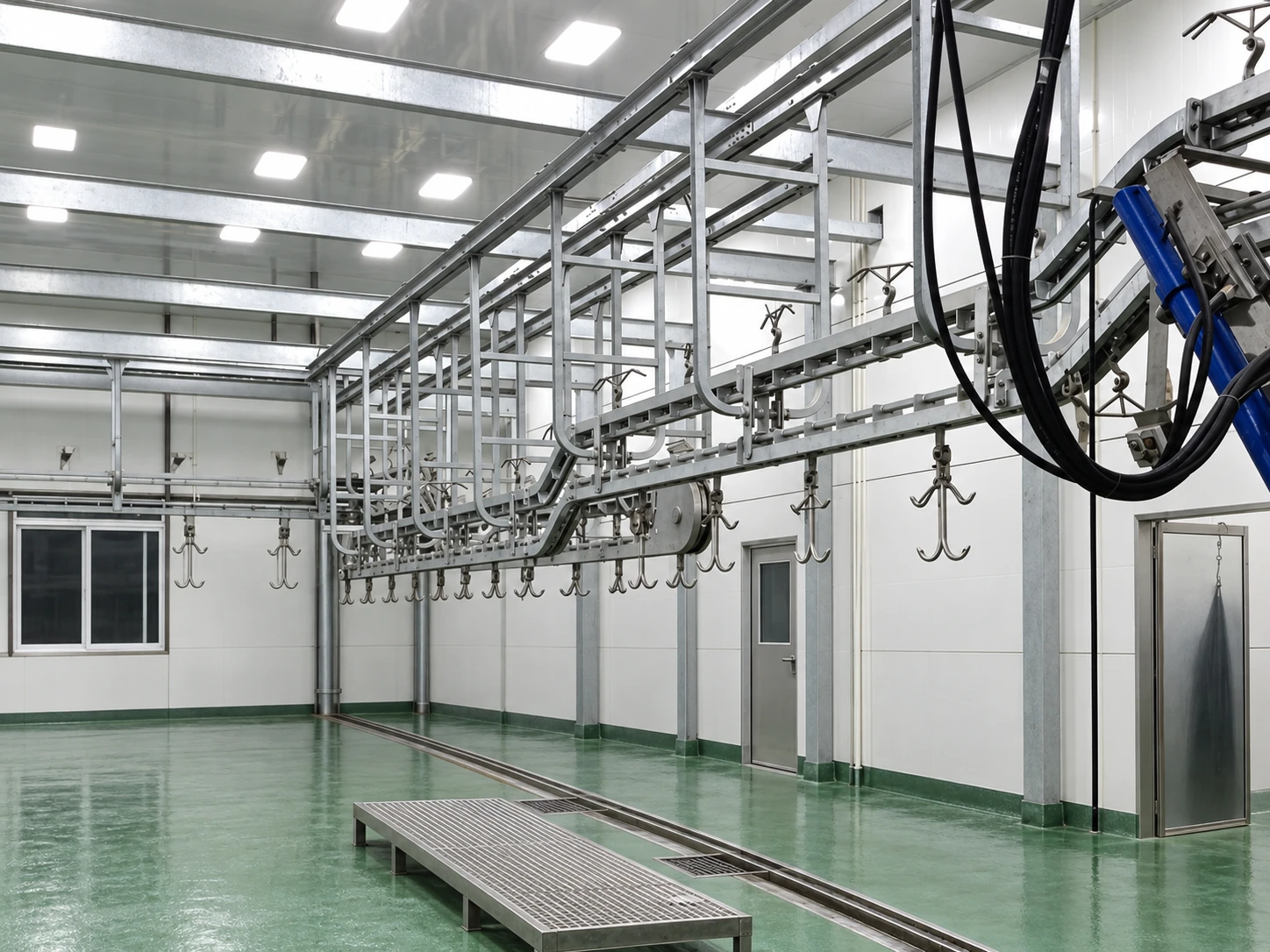
05 / Hind-leg rehanging & evisceration
- Task
- Set the rehanging handoff before the clean-area dressing work. Connect the operator platform with the offal receiving route and define how carcass identity remains related to the material presented for inspection.
- Equipment
- Rehanging position; evisceration work position; offal interface
- Site check
- Agree the clean-area boundary, working access and offal receiving/identification arrangement with the process and veterinary teams.
Incoming: Mechanical dehiding
Next interface: Veterinary inspection & trimming
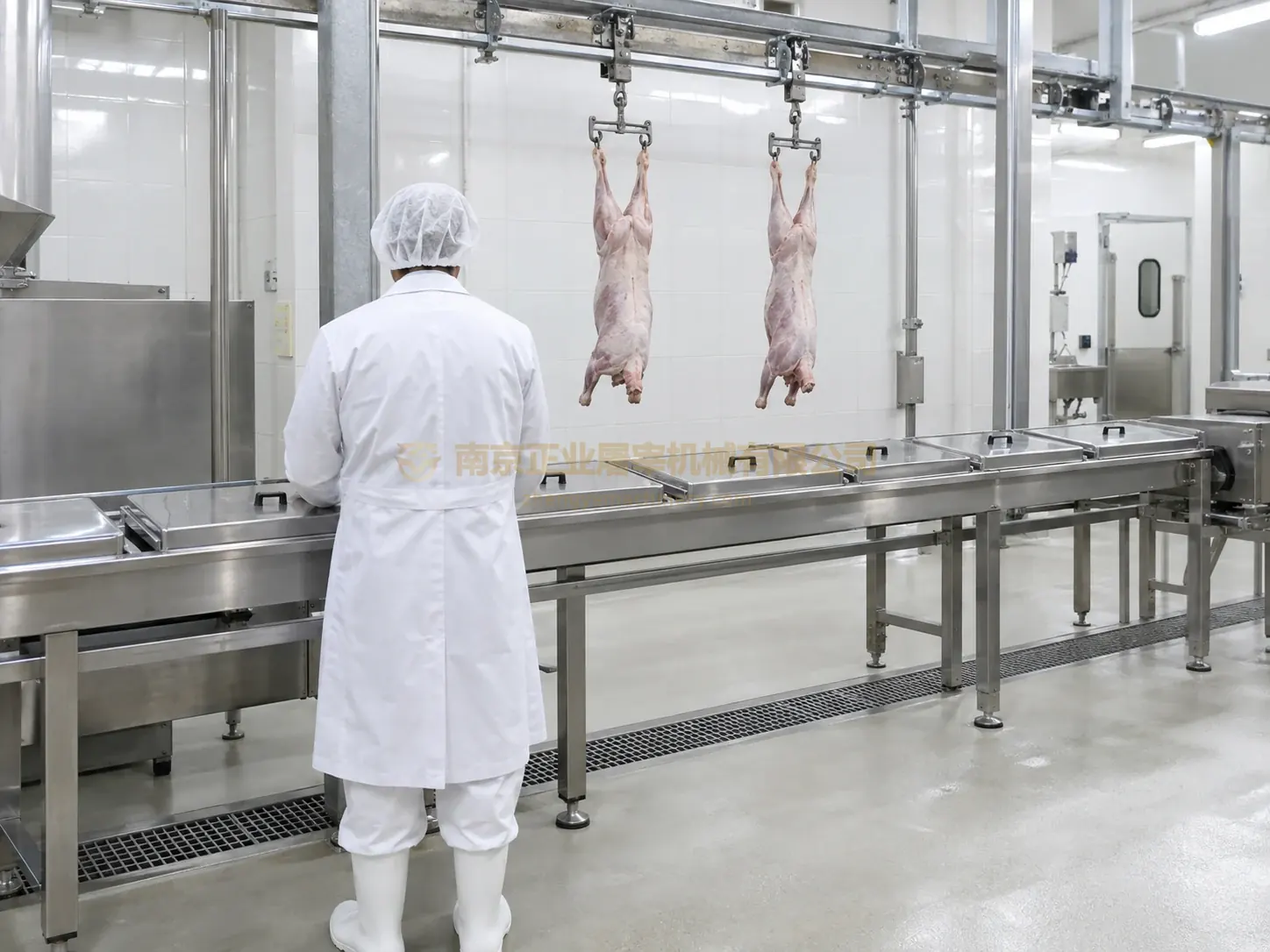
06 / Veterinary inspection & trimming
- Task
- Reserve inspection work positions after evisceration and before the chilling transfer. Keep the carcass route, related offal and any held material accessible to the veterinary workflow, with trimming work located around that decision.
- Equipment
- Inspection work position; trimming position; platform and conveyor interface
- Site check
- Have the competent veterinary team define release, hold and reject routes, rather than treating inspection as an empty space on the rail.
Incoming: Hind-leg rehanging & evisceration
Next interface: Rail transfer & chilling interface
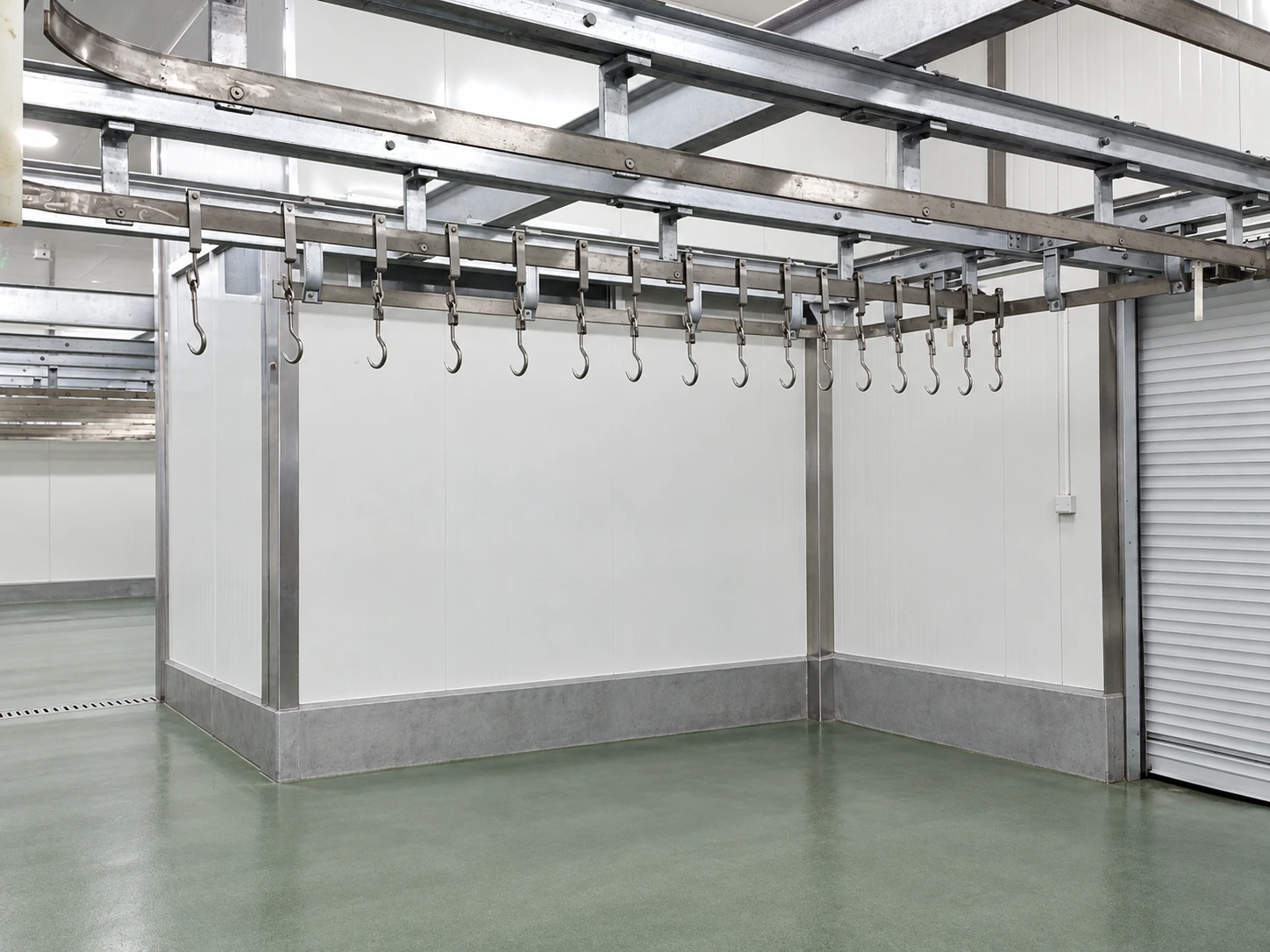
07 / Rail transfer & chilling interface
- Task
- Coordinate the final hanging arrangement, transfer rail and cold-room doorway. The mechanical handoff must be reviewed alongside the refrigeration scope and the intended chilled-product route beyond the slaughter line.
- Equipment
- Transfer rail; hanging hooks; chilling interface
- Site check
- Measure doorway clearances, rail/support geometry and the next product route. Define who supplies refrigeration and cold-room controls.
Incoming: Veterinary inspection & trimming
Next interface: Cold-room and chilled-product handling scope
What makes the route workable
- Relate animal handling and the release into dressing to the agreed halal or conventional operating method.
- Draw skins, heads, offal, edible product and held material as separate movements where required.
- Include staff access, hand washing, tool sanitation, cleaning and maintenance in the layout.
- Review sheep and goat size ranges, rather than assuming every setting suits both species.
- Carry the rail geometry through the cold-room doorway, with refrigeration responsibilities written separately.
Review the layout and collect the planning inputs before requesting an equipment arrangement.